VOLUME VISSUE 2 and 3july - December 2013
TCSRD Round Up
A field study visit to the Momai forest was organised for ECO Club volunteers to study indigenous flora and avi-fauna. The volunteers also undertook a flora survey and mapping of the endangered Gugal and other rare plants in the forest.
A total of 18 awareness programs cum knowledge sharing sessions on environmental issues and biodiversity conservation were organized for employees and their family members, ECO Club students, teachers and SHG members on topics including Global Warming; Climate Change; the Biodiversity of Okhamandal; Indigenous flora of Okhamandal, Snakes of Mithapur; endangered marine turtles of Okhamandal; coastal ecosystem conservation etc.
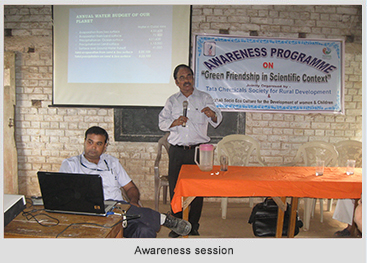
At Haldia too, 60 students from three government high schools participated in the awareness cum sensitization program on "Green Friendship in Scientific Context". The program sensitized children about water scarcity and different ways to harvest water. Issues related to bio-diversity, global warming, and pollution control were also discussed along with the demonstration of various solar products during the session. After the session, the eco club students came up with interesting “Water Harvesting” models. Overall, the session was very useful for the children as they got opportunity to interact with experienced faculties.
Carbon Neutral Village Project
Site visit to the project sites of SAMUHA, an organisation around Koppal city in North Karnataka was organisedto study their Carbon Neutral Village program and understand the various activities being carried out by them to address the Climate Change and carbon reduction issues.
Post the visit, carbon neutral village program has been initiated at the Poshitra village, Mithapur. Social survey of the first cluster of 100 households along withGPS mapping has been completed. Based on the survey results and the inputs from SAMUHA , future course of action is being finalised.
Mangroves Plantation Project
Mangroves are an important component of the coastal marine ecology and they help sustain a wide spectrum of marine creatures and birds. Work on establishment of mangrove nursery at Arambda salt works was initiated along with the removal of "Entromorpha" algae at the Rukshmani Creek site mangrove plantation at Dwarka during the reporting period. Regular surveys were carried out to record the waterfowl population at the plantation site.
Marine Turtle Monitoring
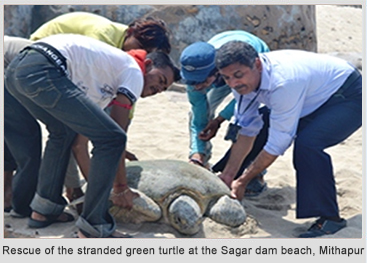
Work on monitoring of marine turtle nesting and mortality at six sites along the Okhamandal west coast continued during the reporting period. A total of 13 dead turtles – 4 Olive Ridley and 9 Green turtle – were reported at the Kala Tul, Mithapur and Sagardambeaches.Nesting of turtles was also reported along the Okhamadhicoast and at Sagardambeach.
International Coastal Cleanup Day program
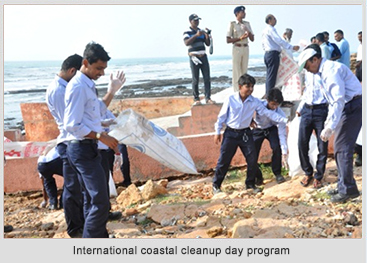
A team of 50 TCL employees, including senior management officials, participated in the International Coastal Clean-up Day program organised by the Marine National Park Dept. at Dwarka. Personnel from the Indian Navy, Indian Coast Guard and the State Forest Dept. also joined the coastal clean-up awarenessrally and helped in cleaning the Sunset Point beach at Dwarka.
Rural Energy
Energy efficient stoves: 33 energy efficient (EE) cooking stoves were constructed at Haldia, adoptingKalyani University (West Bengal) model of the EE chullah.
Low voltage solar based fencing: 65 farmers from 17 villages of Okhamandaltaluka have installed solar fencing to protect their field from wild animals. 1200 acres have been protected so far through this fencing as farmers are very satisfied with the result.
Water Management and conservation
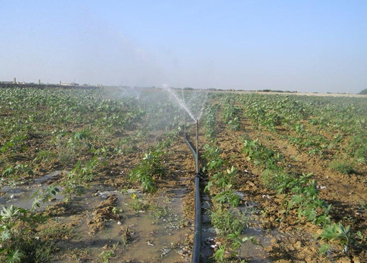
Gomati Dam Channel renovated last year has helped irrigate 628 acres of land of 103 farmers as a result they could now grow crops in all the three season which is monsoon, winter as well as summer season. Two farmer groups of 11 members each has been formed to provide agriculture development inputs and water saving techniques like sprinklers, drip etc. 10 sprinklers have been provided to both the farmer group. These groups have also been linked to Agricultural Technology Management Agency (ATMA), a government agency to disseminate technology at the district level through SREP (Strategic Research and Extension Plan).
Drip Irrigation
Water saving techniques like sprinklers was adopted by 28 farmers covering 140 acres of their land. Drip irrigation was adopted by 3 farmers for horticulture and vegetable crop. 14 sprinklers were given to SC farmers helping irrigate their 70 acre land. With the support of Gujarat Green Revolution Company (GGRC), 52 farmers got sprinklers to irrigate 240 acres of their land.